Gemini 3.0 Pro, GPT 5.1, Claude Sonnet 4.5 A Vibe Coding Comparison for 2025


The AI-assisted coding landscape changes fast. "Vibe coding" and rapid prototyping are now critical skills for 2025. I compared Gemini 3.0 Pro, ChatGPT 5.1, and Claude Sonnet 4.5 in a practical ai coding challenge comparison. My ai model comparison shows Gemini 3.0 Pro is the frontrunner. Gemini offers intuitive, creative rapid prototyping. Gemini acts as a true reasoning partner. This Gemini model excels in coding tasks. Gemini 3.0 Pro helps with complex coding. ChatGPT is functional, but ChatGPT 5.1 lacks the 'vibe'. Claude is structured, but Claude Sonnet 4.5 is less adaptive. Gemini 3 provides an excellent prototype. This AI model is superior.
Key Takeaways
Gemini 3.0 Pro is best for quick and creative coding projects. It helps you build new ideas fast.
ChatGPT 5.1 is good for fixing and improving existing code. It works well for making code better and more organized.
Claude Sonnet 4.5 is strong for big, complex coding jobs. It helps with large projects that need careful planning.
The best AI tool depends on what you need to build. Each AI has its own special strengths.
The Verdict: AI Model Comparison for Vibe Coding
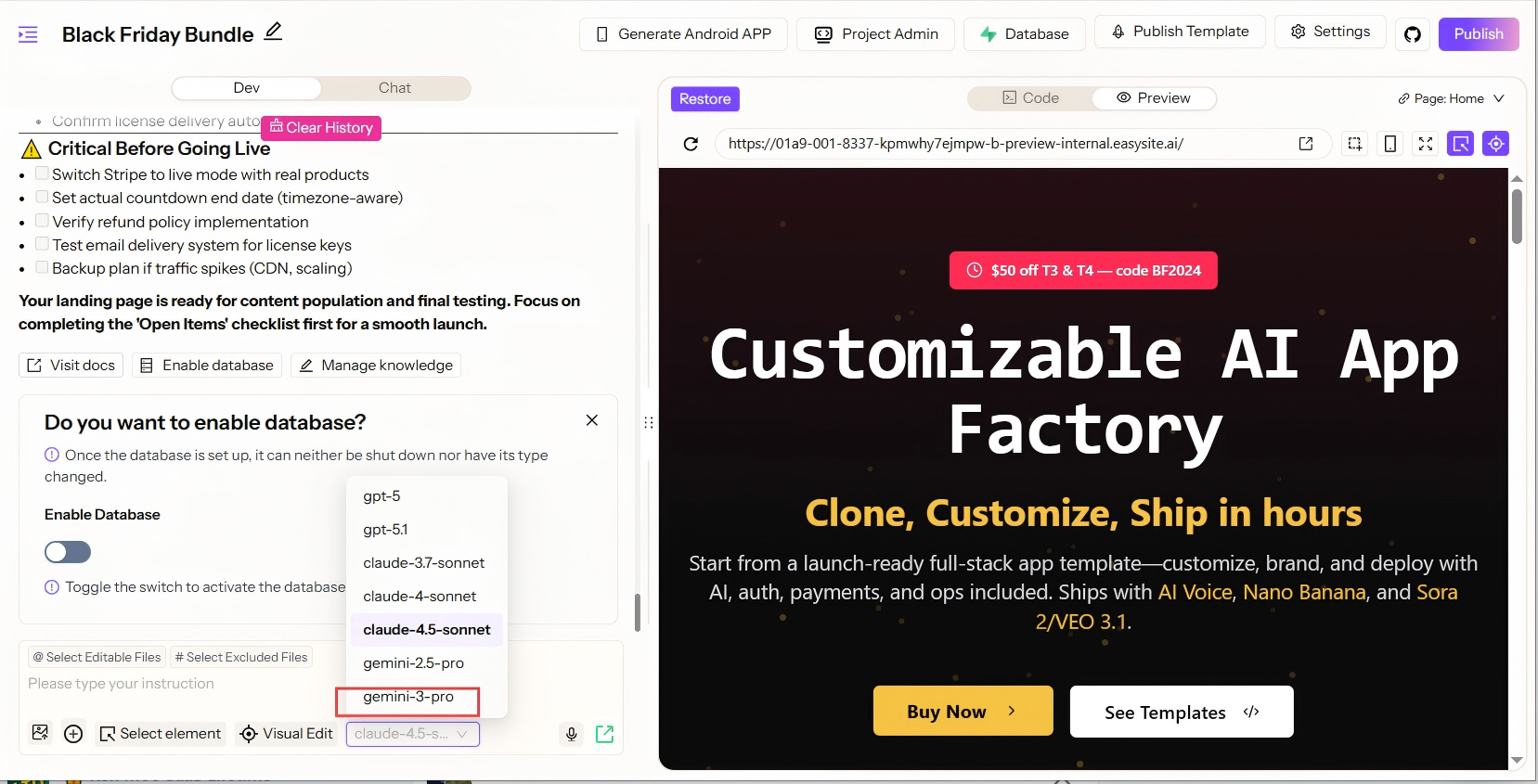
I conducted an ai model comparison to see which AI truly shines for "vibe coding" in 2025. My findings clearly show distinct strengths for each model.
Gemini 3.0 Pro: The Intuitive Creator
When I started this comparison, I looked for a model that could be a true creative partner. Gemini 3.0 Pro stood out immediately. It is the best vibe coding model I have seen yet. This model has thinking capabilities built right in, and its coding performance is exceptional. I found that Gemini 3.0 Pro intuitively understands my coding prompts. It produces strong outputs, helping me quickly create compelling web apps. This is what "vibe coding" is all about. It means I can continuously prompt the large language model from beginning to end. I can do this manually or with agents. This significantly increases my development speed. I use Gemini's capabilities to quickly generate, refine, and integrate code snippets. I do minimal hands-on programming. I use AI tools to generate code, which streamlines my development process. My interaction with Gemini is intuitive and conversation-based. I input simple commands and receive code in return. I can even troubleshoot by copy-pasting error messages. My focus shifts from writing individual lines of code to guiding the AI to produce the desired output. This makes Gemini 3 a powerful tool. It democratizes development. It lets non-developers participate in coding activities. They can create applications without writing code manually. They can focus on creative aspects like UI/UX design. Gemini 3 helps me express my intentions using natural language. The AI then transforms this into executable code. Gemini 3.0 Pro truly acts as an AI agent, giving me real-time suggestions. It automates tedious processes and produces standard codebase structures. I adopt a 'code first, refine later' mindset with Gemini. This prioritizes experimentation and building before optimizing. This model is perfect for rapid prototyping. It aligns with agile principles for fast prototyping, iterative development, and cyclical feedback loops. Gemini 3 is evolving to include multimodal programming, using voice, visual, and text-based coding. This enhances my productivity. Gemini 3.0 Pro makes real-time code production accessible for everyone. It eliminates the need to manually write every line of code.
ChatGPT 5.1: Functional, Less Vibe
ChatGPT 5.1 is a very capable model, but I found it offers a different experience. It excels at managing and understanding entire codebases. This is thanks to its large context window. I noticed it incorporates new agentic debugging processes. This makes it useful for developers. ChatGPT 5.1 can refactor code to improve its structure. It helps code follow principles like SOLID. I can direct it to enhance code performance, even with specific percentage goals. It can also add unit tests for public methods within a codebase. ChatGPT 5.1 is capable of documenting the changes it makes, for example, within a pull request. While these are strong functional capabilities, I felt it lacked the intuitive, creative flow that Gemini 3.0 Pro provided. It is a solid workhorse, but it doesn't quite capture the "vibe" of rapid, creative iteration in the same way.
Claude Sonnet 4.5: Structured, Less Adaptive
Claude Sonnet 4.5 presents a highly structured approach to coding. I found it offers state-of-the-art coding performance. It shows significant improvements on longer horizon tasks. This makes it suitable for complex problems. Claude has significant improvements in multi-step reasoning and code comprehension. This allows it to handle complex, codebase-spanning tasks better. It learns codebase patterns and delivers precise implementations. It handles debugging to architecture with deep contextual understanding. Claude Sonnet 4.5 has exceptional edit capabilities. It reduces error rates. This model balances creativity with control. It is a new generation of coding models. It is efficient at maximizing actions per context window through parallel tool execution. Claude increased planning performance by 18% and end-to-end evaluation scores by 12% for Devin. It excels at testing its own code to deliver production-ready solutions. It can handle over 30 hours of autonomous coding. This allows engineers to tackle complex architectural work faster. It maintains coherence across massive codebases. Claude Sonnet 4.5 has a 200,000-token context window, expandable to 1 million tokens. This allows it to understand entire system architectures. This includes dozens of interconnected files, function dependencies, database schema relationships, and API contract changes simultaneously. It maintains awareness across entire repository structures. Unlike other coding assistants, it comprehends the entire system, not just the immediate context. For example, when refactoring a microservices architecture, it remembers connections between services. It tracks API contract changes and identifies potential breaking changes. It approaches complex tasks systematically. It can split a monolithic service into microservices by analyzing dependency graphs. It proposes gradual migration strategies. It generates comprehensive test suites and documents API contracts. The model can maintain focus and context across multiple refactoring sessions over days. This prevents context switching overhead for developers. Claude demonstrates superior problem-solving capabilities on complex engineering challenges. It goes beyond simple pattern matching. Claude Sonnet 4.5 is the first AI coding solution with ISO/IEC 42001 certification. This establishes systematic AI governance frameworks. These frameworks meet enterprise risk management requirements. While incredibly powerful for large, structured projects, I found Claude less adaptive for the quick, iterative "vibe coding" I was doing.
Methodology: The AI Coding Challenge Comparison
Project: Web-Based "Thumb Wars" Game
I designed a specific ai coding challenge comparison. My test project involved building a web-based prototype. I called this game "Thumb Wars". This game used HTML, CSS, and JavaScript. It needed controls and UI elements. I wanted to see how each model handled a practical coding task. The process started with an idea. I described the game using natural language prompts. I also added reference images. These guided the visual tone and mechanics. The AI then built an interactive 2D game. It used PixiJS. This required no manual coding from me. I refined the prototype through conversation. I used a built-in chat interface. I adjusted elements like camera angles. I also managed in-game visual elements using an Assets tab. This tailored the prototype. It did not require manual sprite sheet editing. This approach allowed me to quickly generate concept sketches or partial elements of the game idea.
Goal: Rapid Prototyping and Creative Iteration
My primary goal was to conduct an ai model comparison. I focused on their ability to support rapid, creative prototyping. This was part of a "vibe coding" challenge for 2025. This meant exploring variations. AI tools helped generate multiple prototypes. They explored different visual styles for the same gameplay. They also suggested alternative control schemes. I looked at variations in difficulty progression. Different narrative approaches were also part of the process. I used iterative prompting. I started with high-level requests. Then I progressively refined the generated code. I provided the AI with relevant sections of related code for complex systems. I also had the AI generate pseudocode for review. This happened before implementing actual code. This process allowed for rapid iteration. It meant quick refinements and adjustments. I did not start from scratch. It offered precise modifications. I had fine-grained control over specific game elements. This design preservation enabled capturing successful elements. I maintained them through 3D model updates. I also brainstormed with AI. It recombined existing concepts to generate new game ideas. I gave specific constraints. These included genre and player action. This guided the AI in creating relevant game mechanics. I used AI to suggest alternative uses for core mechanics. This iterative design and prototyping fed mechanic concepts back into the AI. It suggested refinements and balance. This stress-tested ideas before extensive game development. This was not about competitive coding. It was about creative exploration in coding.
AI Performance Breakdown
Gemini 3.0 Pro: Intuitive and Proactive
I started the ai coding challenge comparison with Gemini 3.0 Pro. Its initial output for my "Thumb Wars" game immediately showed a deep understanding of the concept. Gemini 3 proactively suggested making the game a Progressive Web App (PWA). This was a smart move for a web-based game. It also provided robust HTML and CSS. This code created a 3D-style ring depth for the game arena. I did not explicitly ask for keyboard controls, but Gemini 3 added them. This showed its proactive nature. Iterations with Gemini 3 improved the visuals significantly. I saw better perspective, realistic thumb shapes, and even camera shake effects. It also added depth layering, making the game feel more immersive. This capability makes Gemini 3 a powerful tool for game development.
Gemini 3.0 Pro excels at generating functional, aesthetically pleasing code from high-level descriptions. Google calls this 'vibe coding'. I found it could do zero-shot generation of rich, interactive web UI. It did not need examples or extensive instructions. I used Gemini 3 pro to create code for complex visualizations. This included 3D spaceship games with detailed graphics. I also developed interactive voxel art tools. I built immersive sci-fi environments with advanced shader effects. Gemini 3 generated code for interactive visualizations. This clarified complex technical concepts for educational content. This model truly understands the nuances of a creative coding task.
Gemini 3.0 Pro's intuitive and proactive coding suggestions also shine through its integration with Canvas. This interactive space lets me quickly convert ideas into working prototypes for web apps and Python scripts. I can ask Gemini to generate and preview React or HTML code directly within Canvas. I review the model's changes at each iteration. This highlights its ability to generate and iterate on code effectively. This Gemini model truly acts as a creative partner in the coding process. For any game idea, Gemini 3 is my go-to.
ChatGPT 5.1: Functional with Limitations
Next, I tested ChatGPT 5.1. Its initial output for the "Thumb Wars" game took longer to generate. It also lacked desktop-friendly controls. This was a noticeable difference from Gemini 3. I asked for iterations to add realistic visuals. ChatGPT 5.1 did improve the look. However, it fell short of Gemini's depth and interactivity. The resulting game felt more "static." It did not have the dynamic feel I achieved with Gemini 3. This model provided functional code, but it missed the creative spark. It did not capture the "vibe" I sought for rapid prototyping. For a quick game prototype, I found ChatGPT less intuitive.
Claude Sonnet 4.5: Structured but Inflexible
Finally, I evaluated Claude Sonnet 4.5. Its prototype for the "Thumb Wars" game included character customization and basic combat. This was a good start for a game. However, Claude consistently missed desktop keyboard controls. I prompted it repeatedly, but it did not add them. It also showed limited motion logic. This model failed to intuitively fill design gaps. It stuck strictly to my instructions. This made it less adaptive for creative iteration. While it provided a structured approach, it lacked the proactive intuition seen in Gemini 3. This made the coding task more manual for me. I found its benchmark performance to be strong in other areas, but for this specific game prototyping, it was less flexible. This AI did not quite grasp the dynamic needs of the game.
Deep Dive: Why Gemini 3.0 Pro Excels

Intuitive Reasoning and Understanding
I found Gemini 3.0 Pro truly stands out because of its deep understanding. This AI model has a native multimodal architecture. It understands and works with different data types at the same time. This includes text, images, audio, video, and code. Other models often combine separate parts or process things one after another. Gemini 3's design helps it see and interact with the world more like a human. This architecture gives it enhanced multimodal understanding and reasoning. It finds complex connections across different types of information. This helps with accurate summaries, better question-answering, and creative output. Gemini 3 also processes longer contexts. For example, Gemini 1.5 Pro had a 1 million token context window. This lets Gemini analyze huge amounts of information without losing details. This is a big step forward in its cognitive processing and problem solving.
Creative Iteration and Design Evolution
Gemini 3 helps me create and change designs quickly. It uses a Mixture of Experts (MoE) architecture. This means it activates only 15-20 billion parameters for each query, out of over a trillion total. This makes it fast and efficient for rapid iteration. Its 1 million token context window is massive. It processes entire codebases, books, and long conversations. This helps Gemini 3 understand complex projects and evolving designs. Gemini 3 also uses structured reasoning and step planning. It breaks down hard problems, makes execution plans, finds missing logic, and adjusts plans as needed. This directly supports iterative development. Gemini 3 Pro generates over 2,000 lines of frontend code. It creates full applications and responsive layouts. This speeds up prototyping. It also generates SVG code with animations and interactive effects. This helps design evolution. Gemini 3 supports multi-agent development. Specialized agents work across the editor, terminal, and browser. I can define requirements, and the agents handle the execution and debugging. This shifts my focus to architecture and design, speeding up prototyping. Gemini 3 completes multi-step development tasks on its own. It reads files, runs commands, debugs errors, and installs dependencies. This lets me focus on higher-level design. When I implemented a RESTful API, Gemini 3 Pro finished the task in about 2.7 iterations. Its fast response time of 2.9 seconds made the total time-to-completion competitive. This supports efficient iterative development.
Speed, Usability, and Smart Defaults
Gemini 3 Pro makes coding faster and easier with its smart defaults. It integrates into Google's Workspace (Gmail, Docs, Sheets) and Google Cloud. This makes it easy to use for people already using these tools. Its massive context window lets it analyze entire codebases or thousands of pages of documents at once. This is a unique ability for complex tasks. Gemini 3's multimodal capabilities mean I can describe webpage designs verbally. It then gives me usable HTML/CSS output. It also creates animated progress bars from simple requests. This streamlines visual development. This large context window helps process entire codebases or long research papers quickly. Gemini 3 reduces the number of tools I need. One creator reported a 40% reduction in content production time by using only Gemini 3.
The Reasoning Partner Advantage
Gemini 3 goes beyond just automating tasks. It works side-by-side with me as an AI reasoning partner. It has reasoning and thinking abilities. It handles many tasks and learns from its work and from me. It manages huge complexity without needing structured applications. Gemini 3 uses tools. It connects to different applications, code, and information systems. This gives it context and improves its output. It acts safely. It creates and runs workflows and actions while following rules. It also self-monitors. It explains, tests, checks, and analyzes its own output. Gemini 3 learns from its results. It uses memory and reinforcement learning to get better over time. It focuses on specific goals with clear ways to measure success. It helps create collaborative reasoning. It learns from data and models, letting machines reason and humans check the work. It uses feedback to continuously improve the system. This includes better data access, improved models, and integrating new skills.
Limitations and Trade-offs
Even the most advanced AI models have their limits. I found specific trade-offs with each model during my coding comparison.
Gemini 3.0 Pro: Complexity and Control
Gemini 3.0 Pro is powerful. It offers incredible intuitive reasoning. However, I noticed some limitations. It did not generate full backend or multiplayer logic for my game. Some of its initial design choices were not perfect. Power users might want more direct control over the code. Gemini 3 can sometimes feel like a black box. Community feedback also shows mixed experiences with its agentic planning. This means Gemini 3 might not always plan tasks exactly as a human developer would. This model is great for rapid prototyping, but I still need to guide it.
ChatGPT 5.1: Static Output and Iteration Ceiling
ChatGPT 5.1 is functional. It helps with many coding tasks. However, I found it has an iteration ceiling. Its core architecture is an evolution of previous versions. It is not a complete overhaul. This means it struggles with true novelty. It performs poorly outside its training data. ChatGPT 5.1 also lacks robust, persistent long-term memory. Each new query feels like a fresh start. It cannot fully support true agentic capability. This means it cannot set goals or plan multi-step tasks without constant human help. It also cannot learn continuously from new experiences. This makes its output feel static. I found it less dynamic for creative coding.
Claude Sonnet 4.5: Conservative Instruction Following
Claude Sonnet 4.5 is very structured. Its strengths include its Artifact system for structured prompts. It follows instructions very conservatively. This makes it suitable for stable or enterprise-grade projects. However, this conservative approach has drawbacks. Its safety measures can create false positives. This sometimes redirects users to a lower-tier model. This shows an "alignment-capability tradeoff." Increased safety can restrict the model's behavior. It becomes "safer than ever but also more restricted." Field reports show it sometimes over-blocks benign requests. This is a direct result of its strict safety filters. This behavior highlights the tradeoff. The pursuit of enhanced safety can limit the model's functionality. I found Claude less adaptive for my "vibe coding" challenge.
Strategic Recommendations for 2025
Choosing the right AI tool depends on my project's specific needs. Each model offers unique strengths. I have found clear scenarios where one excels over the others.
When to Choose Gemini 3.0 Pro
I will choose Gemini 3.0 Pro when I need a true creative partner. This ai model excels at rapid prototyping and "vibe coding." If I am exploring new game ideas or building interactive web apps, Gemini 3 is my top choice. Its intuitive understanding helps me quickly bring concepts to life. I find Gemini 3's proactive suggestions invaluable. It acts as a reasoning partner, guiding me through the creative process. This makes Gemini 3 pro perfect for projects where speed and innovation are key. I use Gemini for all my creative coding needs. This gemini model truly shines for quick iterations. Gemini 3 helps me explore many design options. Gemini 3 is excellent for new projects. Gemini 3 offers great support for developers. Gemini 3 is a powerful tool.
When to Consider ChatGPT 5.1
I consider ChatGPT 5.1 for projects needing robust, functional code. This ai model offers more reliable debugging. It provides stronger logical flow in generated code. I also see better architecture awareness and improved error detection. ChatGPT 5.1 gives stable step-by-step reasoning. This makes chatgpt a solid choice for maintaining existing codebases or building features where correctness is paramount. If I need a dependable workhorse for functional coding, chatgpt is a strong contender. While not as creative as gemini 3 pro, it delivers consistent results.
When to Opt for Claude Sonnet 4.5
I opt for Claude Sonnet 4.5 when tackling complex, enterprise-grade projects. This claude model is ideal for end-to-end software development processes. It handles rich code generation and planning, supporting up to 64K output tokens. I use it for agentic coding, completing tasks across the entire software development lifecycle. Claude excels at complex, codebase-spanning tasks. It handles multi-step reasoning and code comprehension. I can deploy agents using this ai model to patch vulnerabilities autonomously. It also handles debugging and architecture with deep contextual understanding. Its exceptional edit capabilities significantly reduce error rates. Michael Truell from Cursor notes its state-of-the-art coding performance. Mario Rodriguez from GitHub highlights its improvements in multi-step reasoning. Scott Wu from Cognition saw increased planning performance with this model. Michele Catasta from Replit found its edit capabilities exceptional. Sean Ward from iGent says it handles 30+ hours of autonomous coding. Eric Wendelin from Netflix finds it excellent for software development tasks. This model is perfect for production coding workflows and multi-step coding projects. It offers a different strength than gemini 3 pro.
My ai model comparison and ai coding challenge comparison confirm Gemini 3.0 Pro is the superior choice for "vibe coding" and rapid prototype development in 2025. This Gemini 3 model, with its intuitive reasoning and smart defaults, truly excels as a reasoning partner. ChatGPT 5.1 offers functional coding, but this chatgpt model is less vibrant; chatgpt focuses on stability. Claude Sonnet 4.5 is structured and stable, but this claude model is less adaptive. The best AI tool depends on your project's needs. The future of AI in coding is exciting. It involves agentic IDEs and natural language programming. Choosing the right AI model, considering form factors and task decomposition, aligns with your development philosophy.
FAQ
❓ Which AI model should I pick for a brand-new creative project?
I recommend Gemini 3.0 Pro. It excels at "vibe coding" and rapid prototyping. It helps you quickly bring your ideas to life, especially for a new web-based game. Gemini acts as a true creative partner.
💡 Can ChatGPT 5.1 help me with complex coding problems?
Yes, chatgpt 5.1 is very capable for complex coding. It manages entire codebases well. I find chatgpt useful for refactoring and adding unit tests. It offers strong functional capabilities for problem solving, but chatgpt lacks the creative spark for a new game.
⚙️ When is Claude Sonnet 4.5 the best choice for my coding tasks?
I opt for Claude Sonnet 4.5 when tackling large, structured, enterprise-grade projects. It handles complex, codebase-spanning tasks with deep understanding. Its structured approach is great for stability. It is not ideal for a quick game prototype.
🚀 What is "vibe coding" and why is it important for me?
"Vibe coding" means rapid, intuitive prototyping. It lets you quickly explore creative ideas. I use it to generate and refine code with minimal manual effort. This speeds up development. It helps me focus on design and iteration for any game.
See Also
GPT 5.1 in 2025: Unveiling Its Latest Features and Innovations
Mastering Token Consumption in Vibe Coding: A 2025 Guide
Claude Sonnet 4.5 vs. GPT-5: Best AI for Coding and Business